

- Home
- Blog
- Industry News
- What Should You Check Before Specifying a 4 Inch Butterfly Valve for a Water Line
What Should You Check Before Specifying a 4 Inch Butterfly Valve for a Water Line
-
 ET Valve
 - September 24, 2026
Start with the Duty, Not the Nominal Size
Before specifying a 4 inch butterfly valve for a water line, confirm the pipe and flange standard, design pressure including surge, temperature and medium quality, connection type, wetted materials, required flow, operator, and installation space. The nominal size is only a starting point. A valve marked NPS 4 or DN100 can still be unsuitable because its pressure rating, bolt pattern, seat, disc clearance, or actuator does not match the system.
Record these conditions before comparing quotations. It gives the manufacturer a defined duty to check and prevents a familiar procurement problem: receiving a valve of the expected nominal size that cannot be installed or operated as intended.
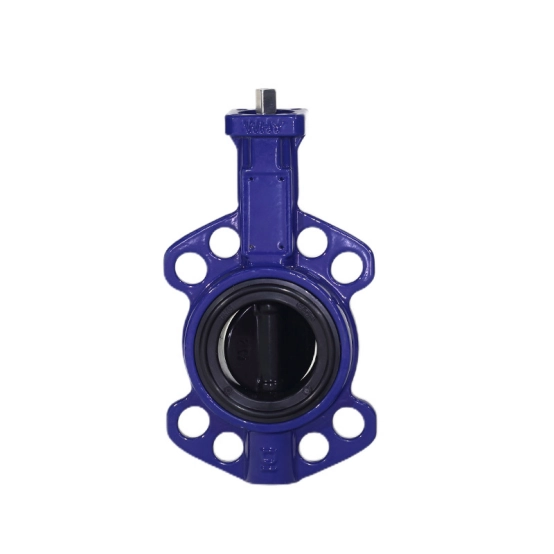
Confirm the Size and Hydraulic Duty
NPS 4 and DN100 are nominal designations, not guaranteed measurements of the flow bore. State the pipe material, schedule or actual inside diameter, and flange standard. Also check that the open disc will clear the pipe bore, lining, gaskets, and any nearby fitting.
A preliminary velocity check uses:
v = 4Q / (pi D^2)
Here, v is mean velocity in m/s, Q is flow in m3/s, and D is the actual pipe inside diameter in metres. For an illustrative flow of 50 m3/h, Q is 0.0139 m3/s. If the actual ID is 0.100 m, the calculated velocity is about 1.77 m/s.
This example is not a design recommendation. Use the real pipe ID and the manufacturer’s Cv or Kv data at the intended disc angle to evaluate pressure loss, throttling behavior, and available margin. Review the butterfly valve operating basics if the valve’s role in isolation or flow regulation has not yet been fixed.
Define Pressure, Temperature, and Medium Quality
Do not select the pressure class from normal running pressure alone. Provide normal pressure, maximum static or pump shutoff pressure, and the expected transient surge. Ask the supplier to distinguish the body pressure rating from the seat shutoff rating and, where relevant, the dead-end rating. These values are not automatically identical.
Give both minimum and maximum water temperature. Describe whether the medium is drinking water, treated process water, cooling water, wastewater, seawater, or another service. Disinfectants, chlorides, suspended solids, oils, and cleaning chemicals can change seat, disc, stem, and coating choices. A broad catalog temperature range does not prove that every material combination is suitable.
For potable-water projects, state the required local approval by name and request evidence for the exact offered valve configuration. Material compatibility by itself is not proof of drinking-water certification or project acceptance.
Match the Connection and Installation Envelope
Choose the body pattern according to installation and maintenance needs:
| Body Pattern | Practical Fit | Item to Verify |
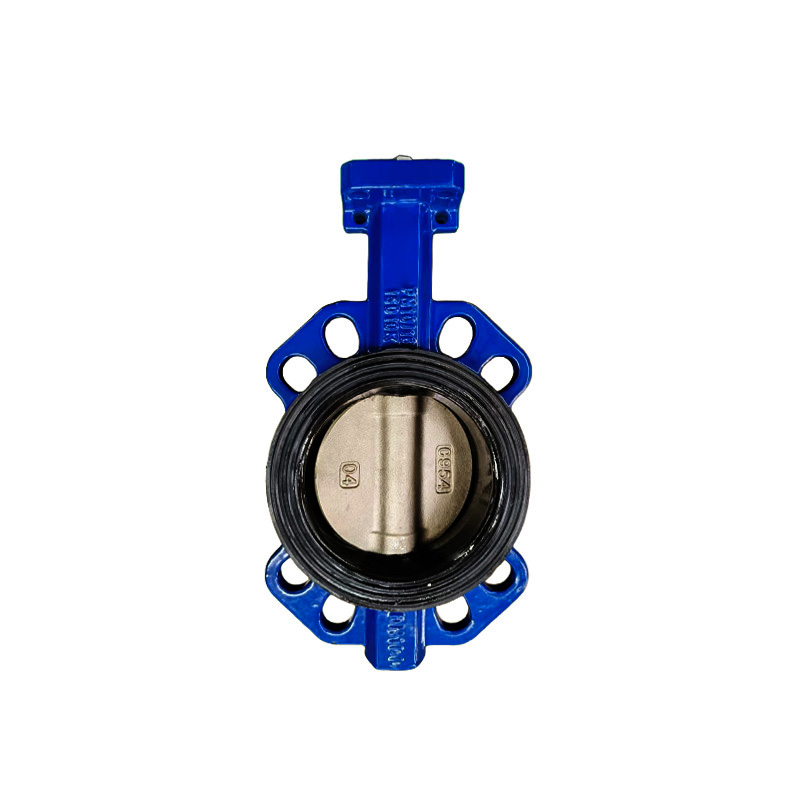
| Wafer | Compact valve clamped between two flanges | Flange alignment, bolt length, and pipe support |
| Lug | Threaded lugs can support different isolation arrangements | Manufacturer’s dead-end rating and allowable direction |
| Double flange | Useful where a flanged body and greater pipe support are preferred | Face-to-face dimension, weight, and support |
A lug-type construction may suit a line where downstream pipe removal is planned, but that duty must be explicitly rated. A double-flange construction has a different envelope and support requirement.
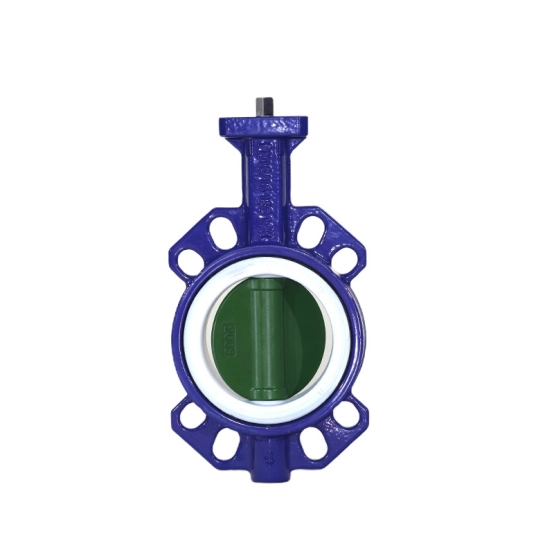
Specify the flange standard and pressure class, such as PN10, PN16, ANSI Class 150, or JIS 10K, rather than writing only “4 inch.” Confirm bolt pattern, flange facing, gasket arrangement, bolt length, face-to-face space, pipe lining, and disc clearance. Leave enough access to move a lever fully or service a gearbox or actuator.
Choose Wetted Materials and Actuation
EPDM is a common starting point for compatible water service, while NBR is often considered where oil contamination is present. Neither statement replaces a review of temperature, chemicals, approvals, and the supplier’s compatibility data. Disc material and body coating should also reflect water chemistry, corrosion exposure, and external site conditions.
ET VALVE lists EPDM, NBR, PTFE, VITON, polyurethane, and silicone among available seat materials on relevant product pages. ET VALVE’s soft-seated wafer butterfly valve options also show manual, gearbox, electric, and pneumatic actuation choices. Availability does not establish suitability for a particular project; the complete offered build must be checked.
Use a lever only when operating torque, access, and cycle frequency make it practical. Consider a gearbox for controlled manual movement, or electric or pneumatic actuation for remote operation. For automated service, define power or air supply, open-close time, fail position, position feedback, control signal, enclosure protection, and cycle frequency. Size the operator from manufacturer torque data with an appropriate project margin.
Use a Final Specification Checklist
Complete this information before issuing the RFQ:
| Specification Field | Information to Provide |
| Service | Water type, composition, solids, and required approvals |
| Pipe | NPS/DN, material, schedule or ID, and lining |
| Pressure | Normal, maximum static, surge, and test pressure |
| Temperature | Minimum and maximum design values |
| Connection | Wafer, lug, or double flanged; standard, class, and facing |
| Materials | Body, disc, stem, seat, coating, and approval needs |
| Performance | Flow, allowable pressure loss, shutoff class, and direction |
| Operator | Lever, gearbox, electric, or pneumatic; controls and fail state |
| Installation | Orientation, clearance, support, access, and dead-end duty |
| Documentation | Drawings, datasheets, test certificates, and inspection needs |
Avoid three shortcuts: ordering from “4 inch” alone, assuming the body pressure class defines shutoff performance, and ignoring surge or disc clearance. Ask for a dimensional drawing and technical datasheet for the offered model before approval.
FAQ
These questions address details that commonly delay a DN100 water-line valve order.
Is a 4 Inch Butterfly Valve Always the Same As DN100?
They are commonly treated as corresponding nominal sizes, but neither term defines every physical dimension. Verify the governing pipe, flange, face-to-face, and valve standards before ordering.
Should I Choose a Wafer or Lug Body for a Water Line?
Choose from the isolation plan, pipe support, maintenance method, space, weight, and cost. If downstream pipe removal or dead-end service is required, obtain the lug valve’s explicit rating for that condition.
Is EPDM Suitable for Potable Water?
EPDM can be compatible with many water duties, but compatibility is not certification. Require the applicable drinking-water approval for the exact valve and acceptance under the project’s governing specification.
Can a 4 Inch Butterfly Valve Be Used for Throttling?
It can be considered for throttling only after checking the control range, velocity, cavitation risk, torque, and published Cv or Kv at the expected operating angles. Do not size it from nominal diameter alone.
What Should I Send with an RFQ?
Send the completed service conditions, pipe and flange details, pressure and temperature limits, materials and approvals, flow duty, shutoff requirement, actuation details, installation constraints, and requested documentation.
Prepare an RFQ That Can Be Checked
A useful RFQ lets both buyer and supplier verify the same operating case. Attach the checklist, piping or layout drawing, applicable project standards, and any inspection requirements. Then contact ET VALVE to request a compatibility review and quotation for the defined water-line duty.
Recent Posts
-

-
-
How Do You Choose a Butterfly Valve for Isolation Versus Throttling ServiceSeptember 18, 2026
RELATED PRODUCTS
Select the product you are interested in
Contact Us
Contact us anytime




ET Valve