

Where Does a 50mm Butterfly Valve Fit Best in Compact Utility Piping
-
 ET Valve
 - 10月 8, 2026
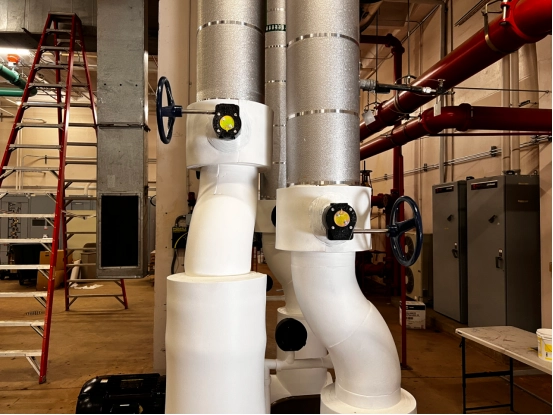
A 50mm butterfly valve is usually a practical fit where a compact utility branch needs quarter-turn isolation, moderate pressure loss when open, and accessible manual or automated operation. Typical candidates include chilled-water and HVAC branches, municipal or treatment-water skids, equipment isolation, and selected fire-protection or grooved utility lines. The choice is not proven by DN50 alone. Confirm the actual pipe and connection standard, flow, pressure including surge, temperature, seat compatibility, disc clearance, and actuator access before approving the valve.
The best location for DN50 is therefore a defined service envelope, not simply the smallest branch shown on a drawing.
What Makes a 50mm Butterfly Valve a Good Compact-Piping Fit?
DN50 works well when the line is large enough to carry the required flow without excessive velocity, the valve rating covers normal and transient pressure, and the operator can be reached without removing nearby equipment. Its short quarter-turn movement can simplify isolation at a pump, heat exchanger, packaged skid, or utility header where a longer valve body would consume valuable space.
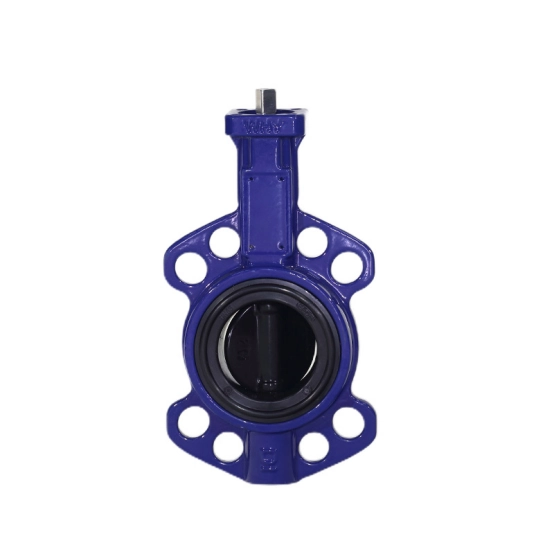
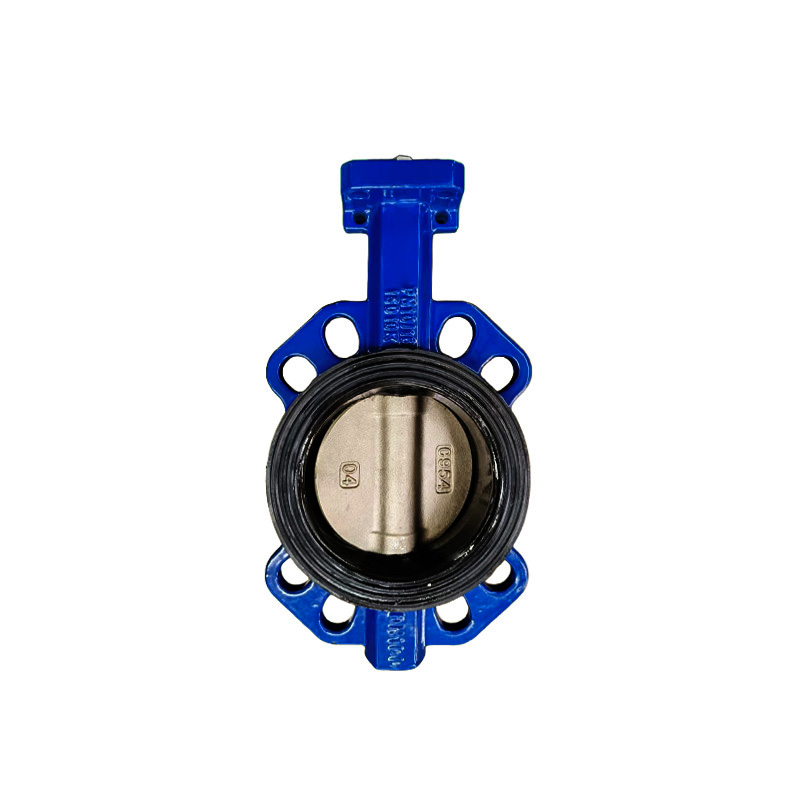
Use the size as a starting point, then verify the duty. ET VALVE’s published wafer-type soft-seated range starts at DN40 and extends to DN1200, but that range does not automatically establish the correct seat, connection, pressure class, or control performance for a particular DN50 line.
A DN50 butterfly valve deserves a separate review when the service involves steam, high temperature, abrasive solids, severe continuous throttling, or chemicals whose compatibility is unknown. Those duties may require another valve design, a different seat, or a specialist material review.
Where Does DN50 Fit Best in Utility Piping?
The strongest candidates are compact branches where isolation is more important than fine control:
| Utility Duty | Why DN50 Can Fit | Check Before Approval |
| Chilled-water or HVAC branch | Compact isolation near pumps or coils | Water chemistry, insulation clearance, access |
| Treatment or municipal water skid | Equipment-branch isolation | Pressure class, seat approval, solids, flange standard |
| Fire-protection or grooved branch | Coupled installation in restricted work areas | Governing approval, AWWA C606, listing requirements |
| Packaged equipment or utility header | Local or remote quarter-turn shutoff | Disc clearance, support, actuator envelope |
ET VALVE identifies water treatment, municipal engineering, and fire protection as relevant grooved-valve applications. Treat those as categories, not project approval: the pipe standard, local code, shutoff class, and system designer still decide acceptance.
The size is a poor fit when it would operate nearly closed, face unstable differential pressure, or handle solids that can damage the seat. Compare the isolation-versus-throttling selection guidance before using a standard isolation valve for control.
How Should You Check DN50 Flow and Pressure?
Start with the actual pipe inside diameter, not the DN label. A preliminary mean-velocity screen is:
v = 4Q / (pi D^2)
ここで、 v is velocity in m/s, Q は流量(m3/s)、そして D is the actual inside diameter in metres. For an illustrative 12 m3/h flow, Q is 0.00333 m3/s. With an actual 50 mm ID, the result is approximately 1.70 m/s. This is only a line-level screen; it is not a valve sizing approval.
Ask for the offered valve’s Cv or Kv and pressure-drop data at the expected opening angle. Check flow, upstream and downstream pressure, pump shutoff, surge, temperature, cycle frequency, and leakage class. A valve acceptable fully open may be poor throttling equipment if it spends the shift nearly closed.
Read pressure class with seat and shutoff data. ET VALVE publishes the grooved family as DN50-DN300, PN10/PN16, and 0-85°C; the wafer soft-seated specification includes other combinations. Use the exact offered build and governing standard, not a copied catalogue range.
Which Connection and Clearance Details Matter for a 50mm Butterfly Valve?
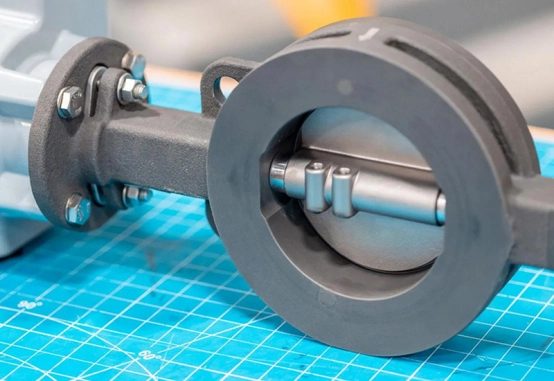
For a wafer valve, confirm both flange faces, bolt length, gasket position, pipe support, and the disc’s ability to swing clear of the pipe bore and lining. Check face-to-face dimension and shaft orientation against the layout. A nominally compact body can still fail if insulation, a check valve, or a structural member blocks the handle or gearbox.
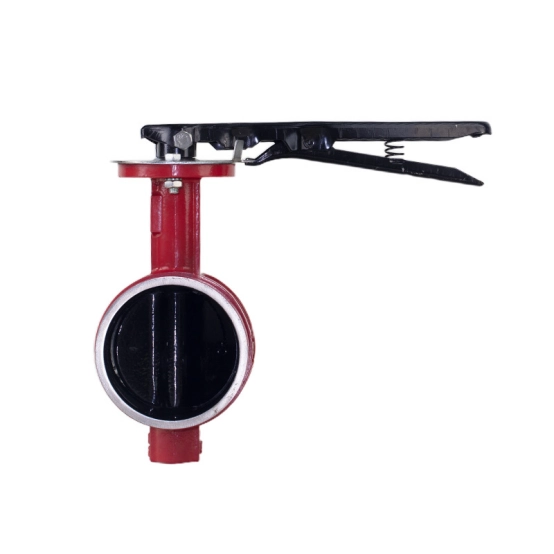
For a grooved installation, verify pipe outside diameter, groove dimensions, coupling, gasket, pressure class, and tightening access. ET VALVE’s grooved DN50 connection is published for DN50-DN300 with AWWA C606 and hand-lever or worm-gear actuation. Couplings can simplify a retrofit where flange alignment or hot work is difficult, but the project standard controls acceptance.
Before release, mark three dimensions on the drawing: valve face-to-face, disc-swing envelope, and operator removal envelope. Also show the pipe supports and any dead-end condition. A lug or grooved arrangement must be explicitly rated for the isolation and maintenance case; footprint alone is not a dead-end rating.
How Do You Choose Materials and Actuation for DN50?
EPDM can be a starting point for compatible water, while NBR may suit oil exposure. Neither is universal. Check temperature, disinfectants, chlorides, cleaning chemicals, solids, and any drinking-water approval against the exact wetted build.
The ET VALVE wafer specification includes EPDM, NBR, polyurethane, and silicone-rubber seats, along with stainless, ductile-iron, aluminium-bronze, and duplex disc or body options. Treat these as available design directions, then request compatibility confirmation. A soft-seated wafer configuration may suit isolation, but the selected seat and pressure direction still need review.
Use a hand lever when torque, access, and cycle frequency permit local operation; a worm gear supports controlled manual movement. Electric or pneumatic actuation needs power or air, speed, fail position, feedback, enclosure, and torque at design differential pressure. For remote positioning, review precision electric actuation as part of the assembly.
What Should a 50mm Butterfly Valve RFQ Include?
Send enough information for the supplier to check the complete assembly:
| RFQ Field | Minimum Information |
| Medium and duty | Fluid, chemistry, solids, isolation or throttling |
| Pipe and connection | DN/NPS, OD/ID, wafer or grooved, standard and class |
| Operating envelope | Flow range, pressure, surge, temperature, cycle frequency |
| 材質 | Seat, disc, body, stem, coatings, approvals |
| 設置 | Orientation, support, clearance, insulation, dead-end case |
| Actuation | Lever, gear, electric or pneumatic; controls and fail state |
| Documents | Drawing, datasheet, tests, certificates, quantity, delivery need |
“50mm butterfly valve, PN16” alone omits the body pattern, seat, operator, and dimensional drawing.
よくある質問
These questions cover the edge cases that most often change a DN50 selection after the nominal size has already been chosen.
Is 50mm the Same As DN50 for a Butterfly Valve?
They are commonly corresponding nominal sizes, but they do not define every physical dimension. Confirm pipe, flange or groove, face-to-face, and valve standards before ordering.
Is a Wafer or Grooved DN50 Valve Better in a Tight Layout?
Choose the connection that matches the pipe ends, standard, support, maintenance method, and approval path. Grooved may simplify a retrofit; wafer may suit an existing flanged line.
Can a 50mm Butterfly Valve Be Used for Throttling?
Only after checking angle, Cv or Kv, velocity, pressure drop, cavitation, seat wear, and actuator control data. A nominally correct isolation valve is not automatically stable control equipment.
Is EPDM Always Suitable for a DN50 Water Valve?
No. EPDM may suit compatible water, but temperature, chemicals, disinfectants, and required approvals must be confirmed for the exact build.
How Do You Size the Actuator for a 50mm Butterfly Valve?
Provide breakaway, running, and seating torque at the design differential pressure, then add cycle frequency, power or air supply, fail position, feedback, and enclosure requirements.
Request a DN50 Compatibility Review
Once the service and layout are defined, send ET VALVE your DN50 service data: medium, flow, pressure, temperature, connection standard, materials, actuator requirements, clearance drawing, quantity, and documentation needs. That package gives the supplier a checkable basis for compatibility review and quotation.
最近の投稿
-

-
水道管用4インチバタフライバルブを指定する前に確認すべき事項9月 24, 2026
-
遮断用と調整用にバタフライバルブを選ぶ方法2026年9月18日
関連製品
興味のある製品を選択してください
お問い合わせ
いつでもお問い合わせください




ET Valve